「Tokyo Treat」


| Cheap sweets | |
| Traditional sweets | |
| Seasonal Events | |
| Character snacks | |
| Dagashi | |
| Allergy Description | |
| Vegetarian Instructions | |
| Official Site | Check |
Price per month total cost 12 months $32.5/mo $390 6 months $33.5/mo $201 3 months $35.5/mo $106.5 1 month $37.5/mo $37.5
Box price only — shipping is added at checkout ($16.99 per box to the U.S. per TokyoTreat’s shipping information page, checked September 28, 2026).
Check out this article analyzing Japanese snack boxes!
What is Tsukimi (moon viewing)?
Tsukimi is the Japanese custom of admiring the autumn moon. It is held on “Jugoya,” the 15th night of the 8th month of the old lunar calendar, also called the Harvest Moon (chushu no meigetsu). According to Japan's Ministry of Agriculture, Forestry and Fisheries, the custom came from China's Mid-Autumn Festival, and in Japan people made dumplings shaped like the full moon and offered them to give thanks for the harvest and pray for a good harvest the next year.
The date changes every year. According to the National Astronomical Observatory of Japan, the 2026 Harvest Moon is on September 25, and the actual full moon comes two days later, on September 27. The observatory also lists October 23, 2026 as “Jusanya” (the 13th night), a second moon-viewing night in autumn.
On these nights, families place tsukimi dango and susuki (pampas grass) by the window and enjoy round, moon-like sweets. The snacks below are the classic ones for moon viewing.
Tsukimi Dango (Moon-Viewing Dumplings)
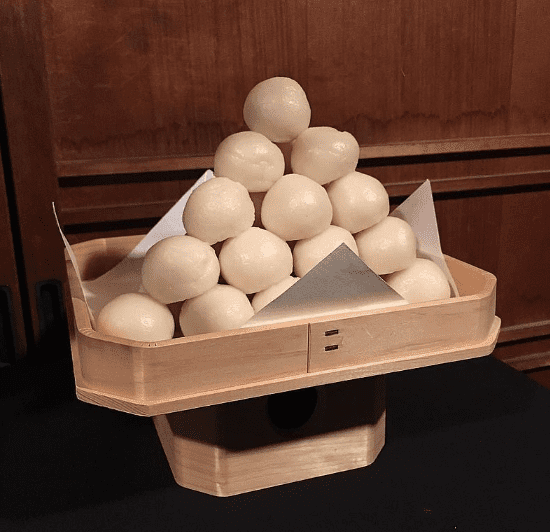
Dumplings are a typical Japanese confectionery made by adding water or hot water to grain flour, rounding it, and steaming or boiling it. The dumplings themselves have a simple, gentle sweet taste, so they are often covered with soybean flour or flavored with soy sauce or bean paste. In Japan, "Jugoya" is celebrated from late September to early October, which falls on the 15th day of the 8th month of the lunar calendar. It is said that this is the most beautiful day of the month in Japan. On this day, there is a custom called "tsukimi," or moon-watching, in which people watch the moon while eating something that looks like the moon. Tsukimi dango," a pyramid of dumplings, is the standard sweet for moon-watching.
Check out similar products!
Mochi (Rice Cake)
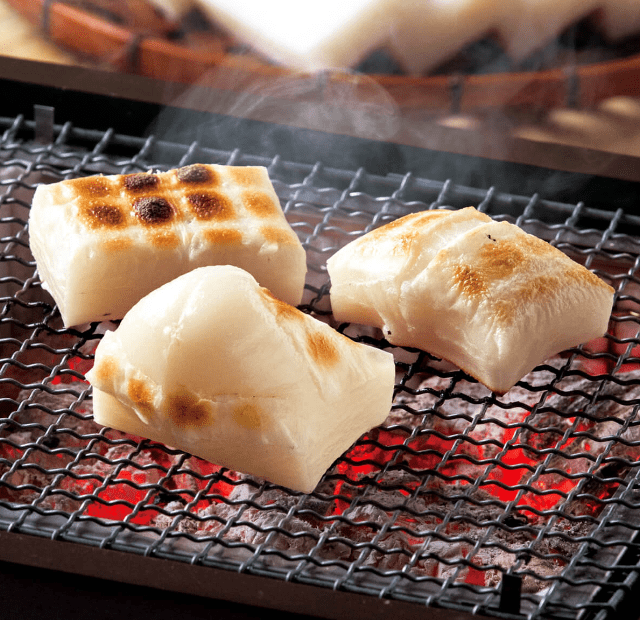
Mochi is a food product made by processing glutinous rice, which is characterized by its unique softness and stickiness. To make mochi, glutinous rice is first polished, soaked in water, drained, wrapped in a steaming cloth, and steamed in a steamer basket. Next, the steamed glutinous rice is pounded with a pestle and mortar until the rice grains lose their shape, and then shaped into round or square shapes that are easy to eat. The mochi itself tastes sweet and simple, so it is eaten with red bean paste, soybean flour, soy sauce, or seaweed. Because of the ancient belief in rice cultivation in Japan, rice cakes are still an indispensable good-luck food for New Year's Day and other occasions of festivities.
Check out similar products!
Daifuku (Mochi with Sweet Filling)
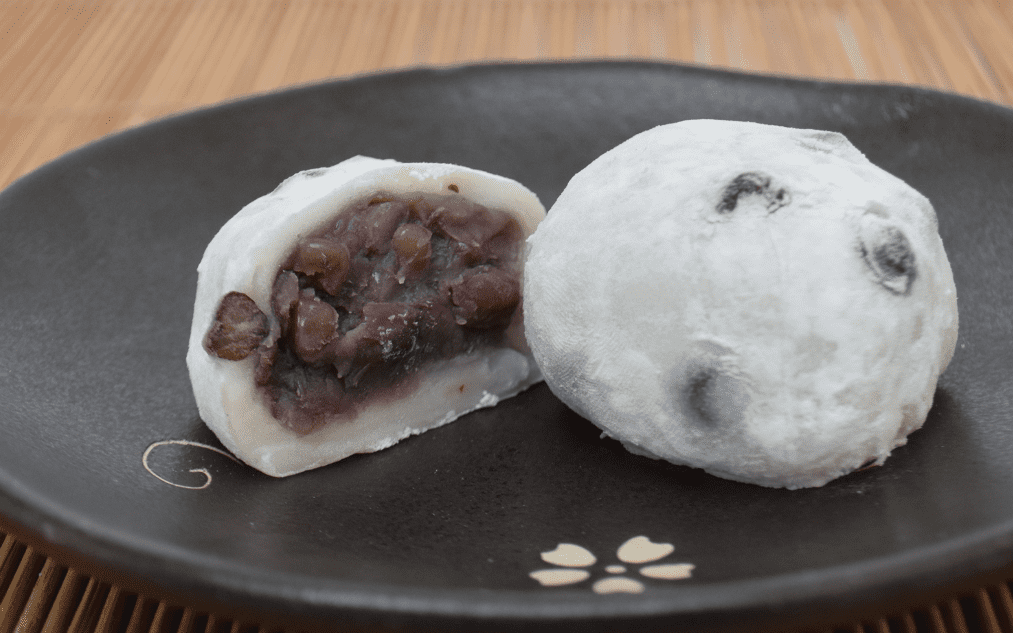
Daifuku is a type of Japanese confectionery consisting of a rice cake filled with red bean paste. The basic taste of Daifuku is a finely textured rice cake filled with an equal or greater amount of sweet red bean paste made from azuki beans. However, in addition to the standard Daifuku, there are many other variations, such as one in which beans or mugwort are added to the mochi, or strawberry or custard cream is added in place of the red bean paste. Daifuku is a Japanese confectionery that continues to evolve and is highly popular among a wide range of generations, with various arrangements made to suit each generation.
Check out similar products!
Manju (Steamed Sweet Buns)
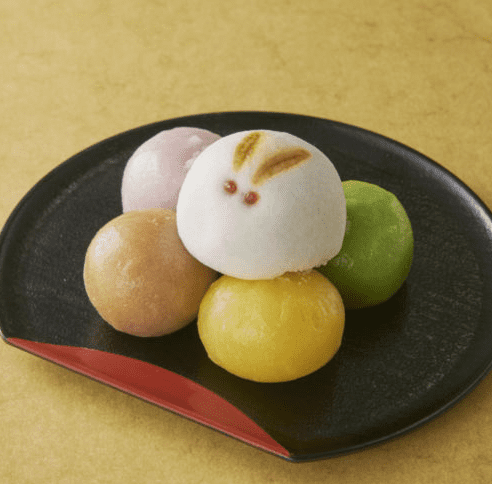
Manju is a confectionery made by kneading wheat or rice flour, wrapping a filling such as azuki bean paste in the skin, and steaming it. There are many varieties of manju in various regions, and manju is especially popular as a snack or souvenir at tourist spots such as hot spring resorts. In Japan, "Jugo Yoru" is from late September to early October, which falls on the 15th day of the 8th month of the lunar calendar. In Japan, this period is considered to be the day when the moon is most beautiful. Therefore, there is a custom called "tsukimi" to watch the moon while eating something that looks like the moon on the night of the 15th. At tsukimi, foods with a picture of a rabbit or yellow food resembling a full moon are eaten.
Check out similar products!
Check out similar products!
Japanese sweets/Best snacks to eat with tea/Authentic japanese snacks/
Seasonal tsukimi sweets at shops in Japan
Around the moon-viewing season, convenience stores and sweet shops in Japan release limited-edition “tsukimi” items. The lineup changes every year, so treat the examples below as a guide to what to look for rather than a list you can buy all year.
Seven-Eleven tsukimi sweets
In 2026, Seven-Eleven Japan announced a moon-viewing lineup that included Otsukimi Pudding Crepe and Otsukimi Roll Cake (from September 1), and Otsukimi Zenzai and a large “Okina Otsukisama Daifuku” with custard whipped cream, about 8cm across (from September 15). The zenzai uses sweet red beans as the night sky, whipped cream as clouds and yellow shiratama dumplings as the moon.
Otsukimi Tart (Quil Fait Bon)
The tart shop Quil Fait Bon sold an “Otsukimi Tart” from September 15 to September 30, 2026. It combines white sesame blancmange with walnuts, mochi and kinako (roasted soybean flour), and is decorated with rabbit ornaments and susuki-style decorations. In Japan, people say they can see a rabbit pounding mochi on the moon, which is why rabbits appear on so many tsukimi sweets.
If you visit Japan in September or October, check the dessert shelves of convenience stores and the sweet shops in department store food halls. Look for the words “月見” (tsukimi) or “お月見” (otsukimi) on the labels.